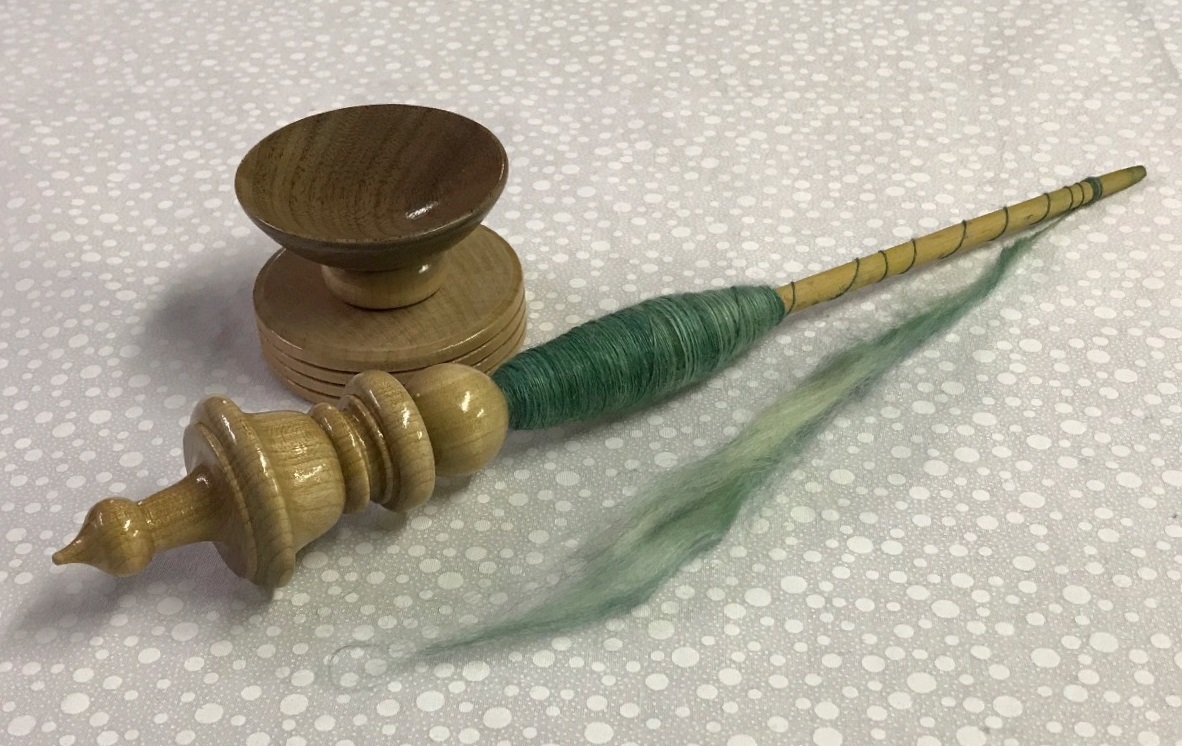
I am still spinning simply, I do not have a wheel, not even sure I will ever want one as I really enjoy using the spindles. It is amazingly meditative.
Having said all that, commercially prepared fibre can get a little pricey especially if you don't have a local source....when you have to factor in exchange rates, shipping and import/custom fees.
 |
| commercially dyed and processed South African Top |
So, I brought it home, watched a number of YouTube videos to learn what to do and more importantly what NOT to do.

The first task was to sort what I had, remove as much vegetable matter as possible and wash a batch. I was surprised to find this was not near as objectionable as I had anticipated.

The trick is to clean the fibre without felting it, which means careful handling and attention to the water temperature. Quick temperature changes and agitation will lead to a felted, matted mess that will render the fibre unusable. I made a bath of very hot water with a bit of Dawn dish soap added to help break down the lanolin and remove the dirt.....soaked the locks for 30 min, rinsed and repeated, each batch took about 3 wash/rinses before the excess water was squeezed out and the fibre left to dry.
I approached this cautiously and tried a couple of different methods...batch 1, was placed in a plastic basket (holes in the basket would allow the water to circulate through the fleece as it was put into the hot water) with as little handling as possible....it worked, but not as well as I had hoped because the bottom of the basket doesnot have holes and so much of the "dirt" collected there.


Batch 2, I tried placing the fibre into mesh bags and washed that way...again, it worked okay but still did not seem to be getting thoroughly cleaned.
By the 3rd batch I was more at ease wth the process and just placed the loose fibre directly into the hot bath and continued with several wash rinse cycles.
Ultimately, a large old salad spinner works great. I can keep the fleece in the “basket” of the spinner...lift it in and out of the wash or rinse water....and then just squish out the most of the water and use the spinner's centrifugal action to force the last of the water out all with out having to touch/move the wet fibre.

I don’t have a drying rack, for that, I stretched some mesh fabric over a large Rubbermaid bin.....pulled taught it gave me a surface to lay the fleece on allowing good air flow all around.
Once dried, the cleaned fibre still looked a little iffy, but I quickly found that carding (using hand carders to pull apart the fibres and realign them) opened up the matted bits and removed any more lingering unwanted material...the fibre was indeed clean and spin ready.


I carded and spun some of the plain fibre, then I played with some dyeing, mixing and blending. Clearly, I was not thinking when I dyed the first batch of locks. I dyed them so that there was a lovely colour gradation....not thinking about the fact that when I began to card the fibre it would simply become a blend...red, yellow and orange.....made orange duh!

then I smartened up and did 3 separate dye pots. I carded the colours both separately as well as some blending


It really is an interesting process going from the animal to the finished yarn.